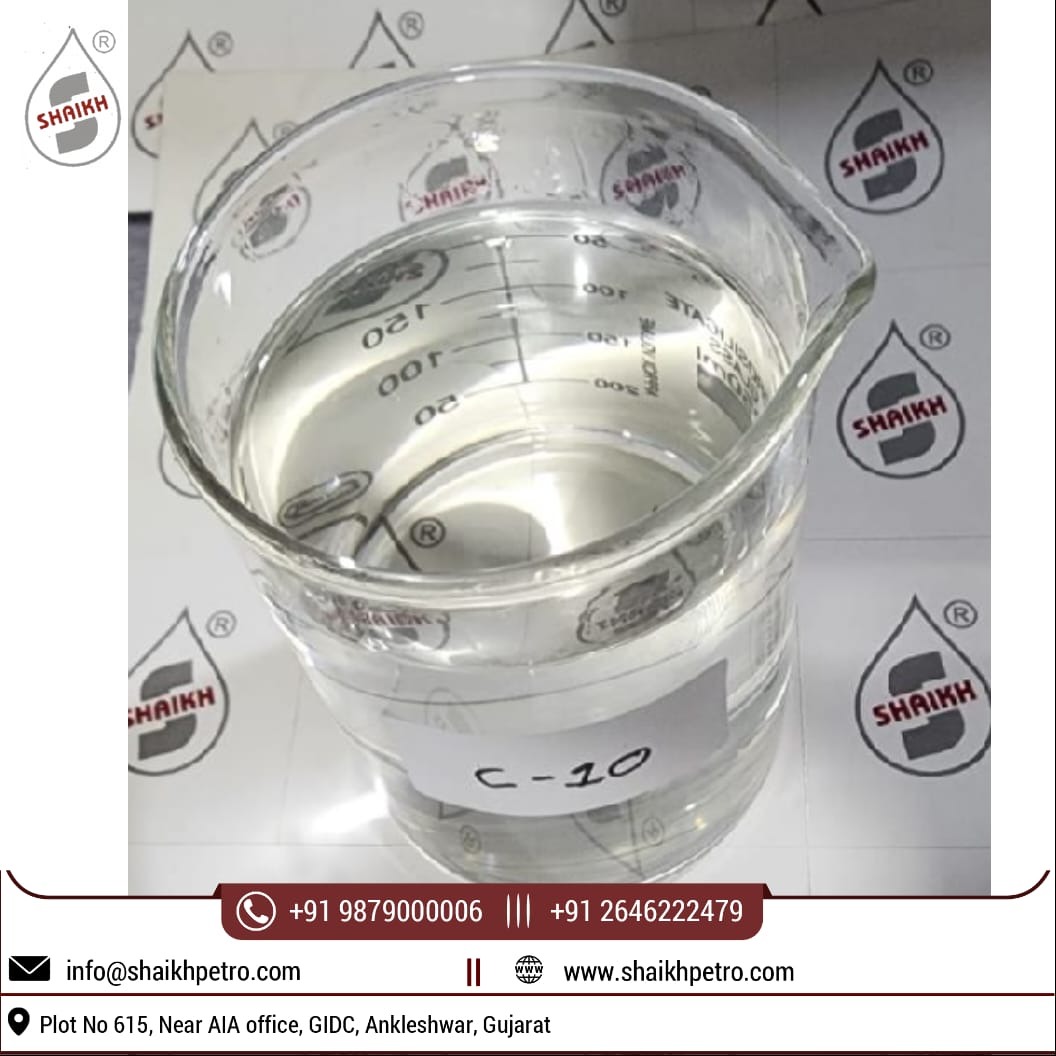
C10 solvents, also known as medium-chain aliphatic hydrocarbons, are primarily composed of straight-chain or branched hydrocarbons that have 10 carbon atoms. Here are some key points about them:
Properties
Boiling Point: Typically ranges from 150°C to 180°C (302°F to 356°F).
Low Toxicity: Generally considered to have lower toxicity compared to shorter-chain solvents, making them safer for certain applications.
Odor: Often has a mild hydrocarbon smell.
Hydrophobic: Not soluble in water, which makes them effective for oil-based formulations.
Common Uses
Paints and Coatings: Used as a solvent to dissolve resins and pigments.
Adhesives: Helps to ensure proper consistency and application of adhesives.
Cleaning Products: Employed in degreasers and cleaners for removing oils and grease.
Fuel Additives: Sometimes used in formulations for enhancing fuel performance.
Safety and Handling
Flammability: Generally flammable; proper storage and handling practices are essential.
Ventilation: Use in well-ventilated areas to avoid inhalation of fumes.
Protective Gear: Gloves and goggles are recommended to prevent skin and eye contact.
Environmental Impact
Volatile Organic Compounds (VOCs): Many C10 solvents can contribute to air pollution; regulations may limit their use in certain applications.